Most agents focus on finding “better” leads. The problem is that lead quality is often misunderstood.
A good lead is not just about intent or price point. It’s a combination of timing, accessibility, and how quickly you engage.
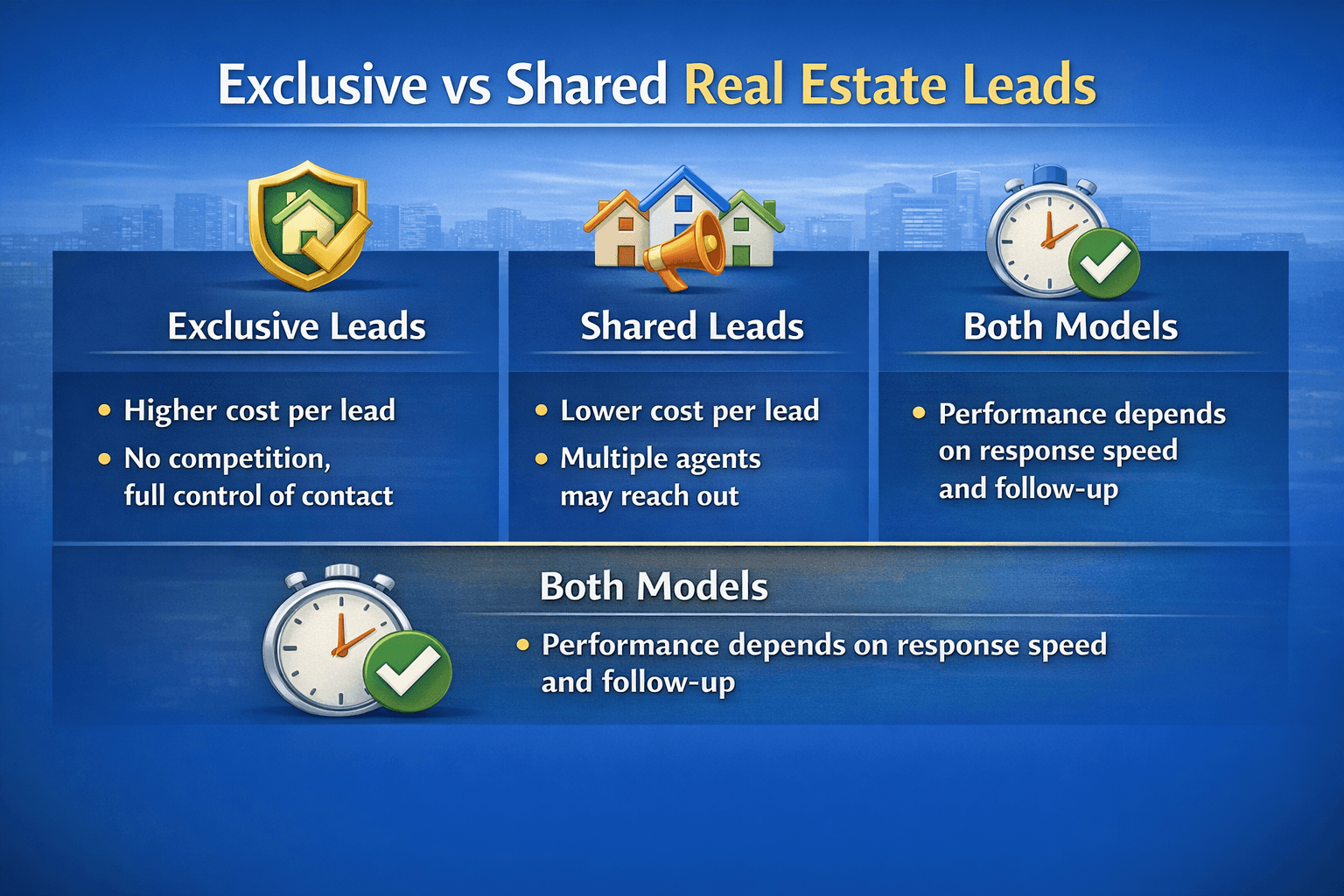
Exclusive leads are often seen as higher quality, while shared leads are viewed as lower value. In reality, both can perform depending on how they are handled.
This page breaks down what actually defines lead quality and how to evaluate exclusive versus shared lead models.
Typical Cost
What Actually Makes a Real Estate Lead “Good”
A real estate lead is considered “good” when it has valid contact information, a clear inquiry or action taken, availability to respond, and timing that aligns with your follow-up, but even strong leads fail when the connection window is missed or the data is incomplete, which means two identical leads can produce completely different outcomes depending on how quickly and consistently they are handled, making lead quality partly inherent but largely operational.
Why Agents Use This
Exclusive leads reduce competition but come at a higher cost, while shared leads introduce competition but allow for lower cost and greater volume, and when comparing performance, an exclusive lead at $100 with a 2 percent conversion rate produces the same $1,000 cost per closing as a shared lead at $20 with a 1 percent conversion rate, meaning the determining factor is not the lead type but the agent’s ability to respond quickly and follow up consistently, so the model does not determine success, execution does.
A Simpler Way
Frequently Asked Questions