Real estate lead generation costs vary widely depending on the source, and understanding cost per lead alongside monthly budget requirements is critical for setting realistic expectations, because different channels produce different pricing structures, volumes, and timelines, which means agents need to evaluate both upfront spend and long-term cost per closing when choosing how to generate leads.
Comparison
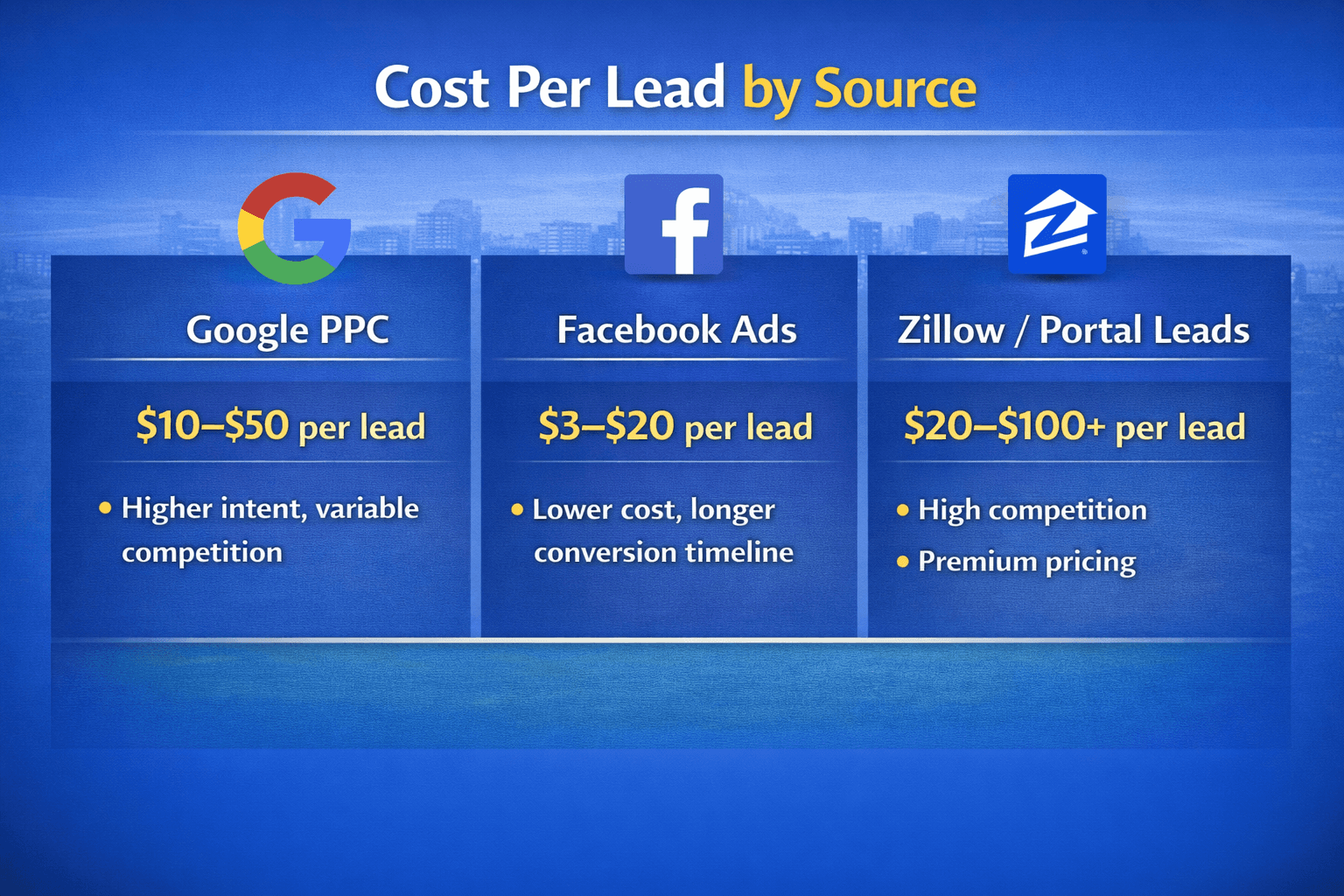
How Monthly Budgets Impact Lead Flow
Lead generation is directly tied to budget, where higher monthly spend increases volume and consistency while lower budgets produce slower and less predictable lead flow, and most paid channels require a minimum level of spend to stabilize performance, meaning small budgets often lead to inconsistent results while larger budgets create more reliable pipelines and better data for optimization over time.
Cost Per Lead vs Cost Per Closing
Cost per lead is only the starting point, because the true metric is cost per closing, which is determined by how many leads it takes to convert a deal, meaning a lower-cost lead source can outperform a higher-cost one if the conversion rate is strong, while expensive leads can still produce poor ROI if follow-up is weak, so evaluating lead generation requires looking beyond price and focusing on how budget, conversion rate, and consistency work together.
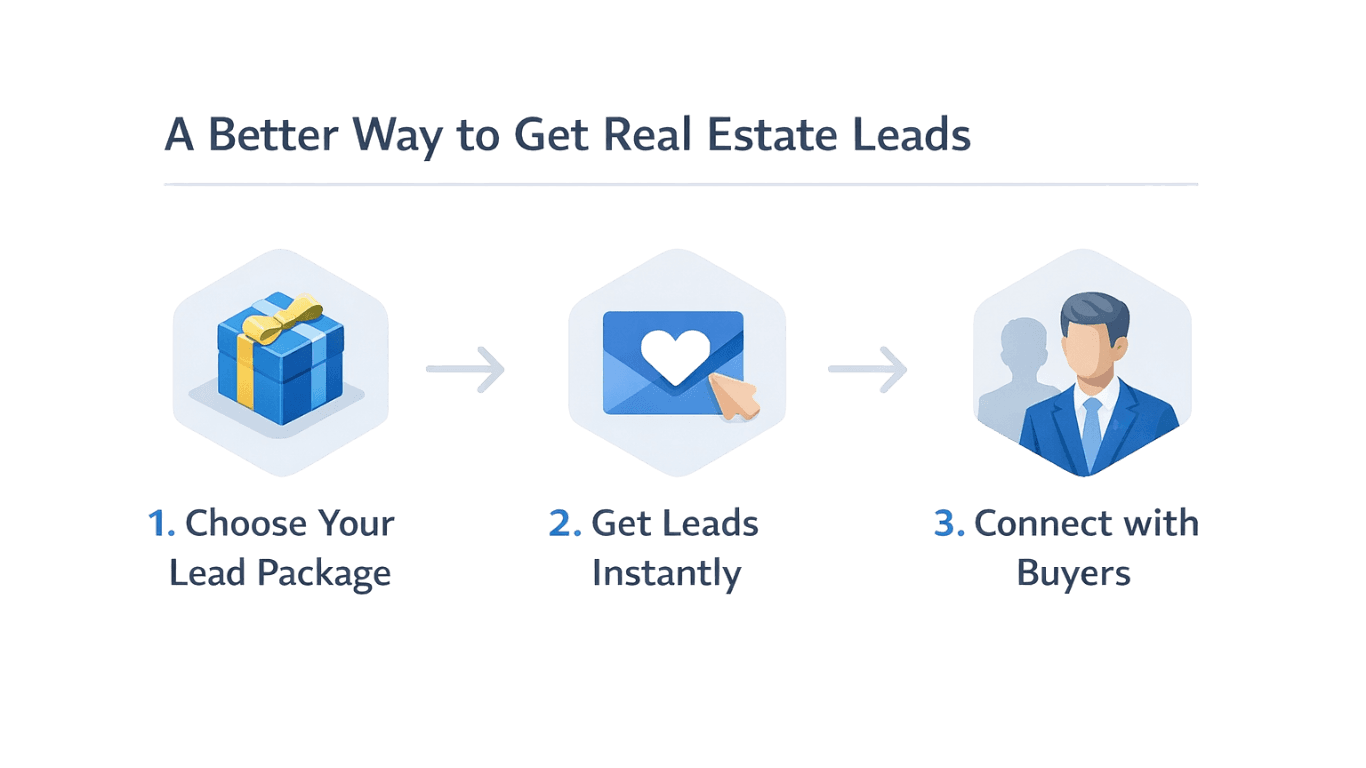
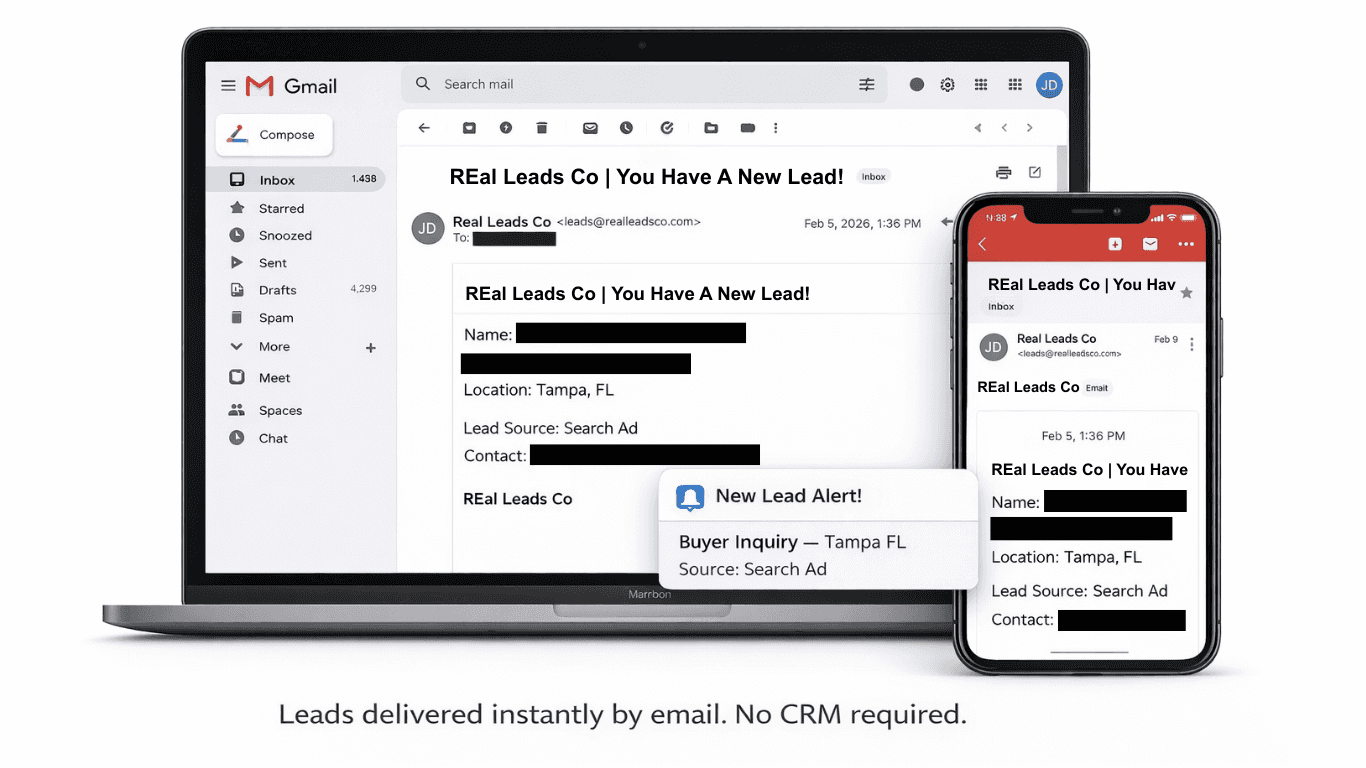
A Simpler Way
Frequently Asked Questions